
Local Article
Blog Post Title | Piloting Sustainable Tourism Training in Ireland |
Date | May 2026 |
Category | Piloting Events |
Short Summary | Throughout April and May 2026, Spectrum Research Centre successfully piloted two FOOTPRINT training resources with 20 participants from Ireland’s vocational education, tourism and hospitality sectors. The sessions introduced the CPD Climate Awareness and Action Toolkit for VET Educators and the Green Business Models Training Programme, combining theoretical learning with practical exercises. Participants explored opportunities to embed sustainability into teaching and business practices, while providing valuable feedback to support the refinement of the project resources. |
Main Article Content | Spectrum Research Centre (SRC) organised a series of piloting workshops during April and May 2026 to evaluate two of the project’s key training resources: the CPD Climate Awareness and Action Toolkit for VET Educators (WP2) and the Green Business Models Training Programme (WP3). Delivered through a combination of online and face-to-face sessions, the activities engaged 20 participants, including vocational educators, tourism business owners, hospitality professionals and managers. The workshops aimed to assess the relevance, accessibility and practical application of the resources, while encouraging greater awareness of sustainable tourism practices. The first phase of piloting took place on 13 and 14 April 2026, involving 12 educators and trainers from Further Education and Training (FET) institutions across Ireland. The sessions introduced the FOOTPRINT CPD Toolkit, which comprises ten modules covering key aspects of sustainable tourism, including environmental stewardship, cultural heritage preservation, community engagement, climate resilience and green business models. Participants explored the toolkit through interactive activities, group discussions and practical exercises designed to demonstrate how the resources could be integrated into existing teaching programmes. Particular emphasis was placed on encouraging educators to reflect on sustainability challenges and consider how these topics could be introduced to learners. Activities such as the Heritage Mapping Exercise and Sustainable Business Model Canvas were particularly well received, with participants highlighting their potential for use in adult education and vocational training settings. Feedback was overwhelmingly positive, with educators appreciating the practical structure of the modules and the availability of ready-to-use teaching resources. Participants also offered constructive suggestions, particularly regarding improving the readability of presentation slides to enhance accessibility. Building on the WP2 activities, SRC conducted the WP3 piloting sessions on 18 and 19 May 2026, engaging eight participants from tourism and hospitality businesses. The workshops brought together representatives from a variety of sectors, including adventure tourism, travel operations, wellness tourism, bike rental and hotel management. Participants were introduced to the Green Business Models Training Programme, which combines theoretical learning with three practical masterclasses exploring ecotourism, cultural tourism and adventure tourism. The sessions focused on translating sustainability principles into practical business decisions. Participants explored how tourism enterprises can reduce their environmental impact, improve operational efficiency, strengthen community relationships and develop more resilient business models. Practical tools, including the Ecotourism Audit Checklist and Business Model Canvas, enabled participants to assess existing business practices and identify opportunities for improvement. These activities also encouraged participants to consider measurable sustainability objectives and begin developing Green Action Plans. The workshops additionally explored green certification, funding opportunities and digital tools that can support the transition towards more sustainable business operations. Participants particularly valued the practical exercises and real-world case studies, noting their relevance to smaller tourism businesses. Suggestions for improvement included providing more accessible links to resources, additional guidance on funding opportunities and further examples from the Irish tourism sector. Across both piloting phases, participants demonstrated strong engagement and enthusiasm for the FOOTPRINT resources. The feedback highlighted the value of combining theoretical knowledge with practical activities, particularly when supporting educators and businesses with different levels of sustainability experience. The piloting also reinforced the importance of accessible, flexible training resources that can be adapted to different educational and business contexts. Through these activities, Spectrum Research Centre contributed to the ongoing evaluation and refinement of the FOOTPRINT training materials, helping ensure that they remain relevant, practical and accessible to their intended audiences. The findings demonstrate how collaboration between vocational education and the tourism industry can support the green transition, equipping educators and businesses with the knowledge and tools needed to contribute to a more sustainable tourism sector. |
Photos | 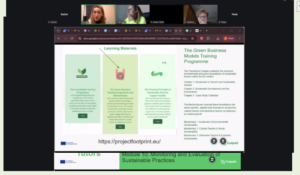 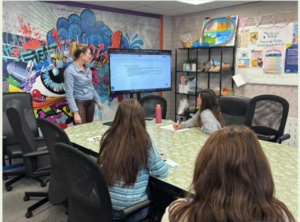 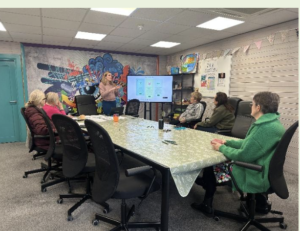 |
Relevant Project Result/Output/Activity |
|
Website / Social Media Links | N/A |


 English
 Spanish
 French
 Portuguese
 Polish