
Local Article
Blog Post Title | Sustainable Tourism in Ireland |
Date | October 2026 |
Category | Sustainable Tourism Best Practices Project Resources |
Short Summary | Sustainability is becoming increasingly important for tourism businesses across Ireland. From improving resource efficiency to protecting biodiversity and supporting local communities, small actions can deliver lasting benefits. Looking at the FOOTPRINT National Support Guide for Ireland, this article explores practical steps tourism SMEs can take towards greener operations, highlighting inspiring examples of sustainable tourism already taking place in Ireland. |
Main Article Content | Ireland’s tourism industry plays an important role in supporting local economies, protecting cultural heritage and showcasing the country’s natural landscapes. From rural accommodation providers and adventure tourism operators to cultural attractions and hospitality businesses, small and medium-sized enterprises (SMEs) are central to the visitor experience. However, tourism businesses are increasingly facing challenges relating to rising operational costs, climate change, resource consumption and changing visitor expectations. While these challenges can appear overwhelming, the transition towards more sustainable tourism does not necessarily require large investments or immediate changes. Through the FOOTPRINT project, the National Support Guide for Ireland has been developed to help tourism SMEs identify realistic opportunities for improvement, access relevant supports and integrate sustainability into everyday business operations. Improving Resource Efficiency One of the simplest ways tourism businesses can begin their sustainability journey is by reviewing how they use energy, water and materials. Small changes, such as installing energy-efficient lighting, reducing single-use plastics, monitoring water consumption and improving recycling practices, can lower environmental impacts while helping businesses reduce operating costs. For example, Cavan Adventure Centre, featured in the FOOTPRINT National Support Guide, has implemented practical sustainability measures, including refillable water stations, rainwater harvesting and energy-efficient building design. These initiatives demonstrate how environmental responsibility can be incorporated into daily business operations. Protecting Biodiversity and Natural Resources Ireland’s landscapes, coastlines and biodiversity are among its greatest tourism assets. Protecting these environments is therefore essential for the long-term sustainability of the sector. Tourism businesses can contribute by using native planting, protecting sensitive habitats, promoting responsible visitor behaviour and collaborating with local conservation projects. Cavan Adventure Centre also provides a valuable example of this approach through its environmental education programmes, wildlife monitoring and commitment to Leave No Trace principles. These actions help protect natural environments while encouraging visitors to develop a greater appreciation for the places they explore. Supporting Local Communities and Cultural Heritage Sustainable tourism extends beyond environmental protection. It also involves ensuring that tourism benefits local communities, supports cultural traditions and creates meaningful visitor experiences. Businesses can contribute by sourcing products locally, collaborating with regional suppliers, supporting local employment and incorporating cultural heritage into their services. Mind Body Breath Healing, another Irish business featured in the National Support Guide, demonstrates this approach through nature-based wellness experiences that connect participants with Irish landscapes, heritage and traditions. By working with local producers and practitioners, the business also supports community connections while promoting environmentally responsible practices. Encouraging Sustainable Travel Experiences Transport and visitor mobility are important considerations for tourism businesses seeking to reduce their environmental impact. Promoting walking, cycling and other low-impact activities can help reduce emissions while encouraging visitors to explore destinations in a more responsible way. Feel Good Bicycles, based in County Meath, provides an example of sustainable tourism through bicycle and e-bike rentals along the Boyne Valley Greenway. The business prioritises repairing and maintaining equipment, reducing waste and collaborating with other local tourism providers. This demonstrates how sustainable transport can support both environmental objectives and the local economy. Making Use of Available Supports Tourism SMEs do not need to navigate the green transition alone. Across Ireland, organisations such as Fáilte Ireland, the Sustainable Energy Authority of Ireland (SEAI) and Local Enterprise Offices provide training, guidance and business supports to help enterprises improve their sustainability practices. The FOOTPRINT National Support Guide brings together information on relevant policies, funding opportunities, certification schemes and practical resources, helping businesses identify suitable starting points for their sustainability journey. The experiences highlighted throughout the FOOTPRINT National Support Guide demonstrate that sustainability is not about transforming a business overnight. Instead, meaningful progress often begins with small, achievable steps that can be developed over time. By improving resource efficiency, protecting natural environments, supporting communities and embracing greener business practices, tourism SMEs can strengthen their competitiveness while contributing to a more sustainable future for Irish tourism. Discover the FOOTPRINT National Support Guide for Ireland and explore practical opportunities to make your tourism business more sustainable. |
Photos | 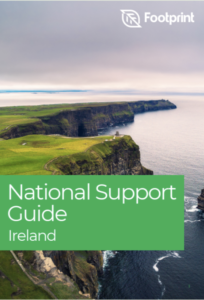 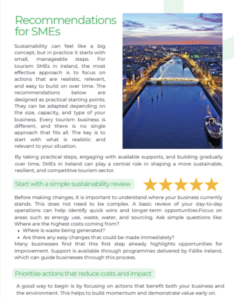 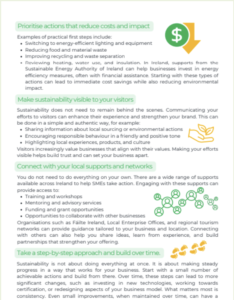 |
Relevant Project Result/Output/Activity |
|
Website / Social Media Links | https://projectfootprint.eu/practice-principles-sustainable-tourism-support-guides/ |


 Spanish
 English
 French
 Portuguese
 Polish